The Menopause Society Annual Meeting: A Learning Experience
Rebecca Levy-Gantt
October 27, 20265 min read
What does a menopause practitioner learn from attending an annual menopause society meeting?
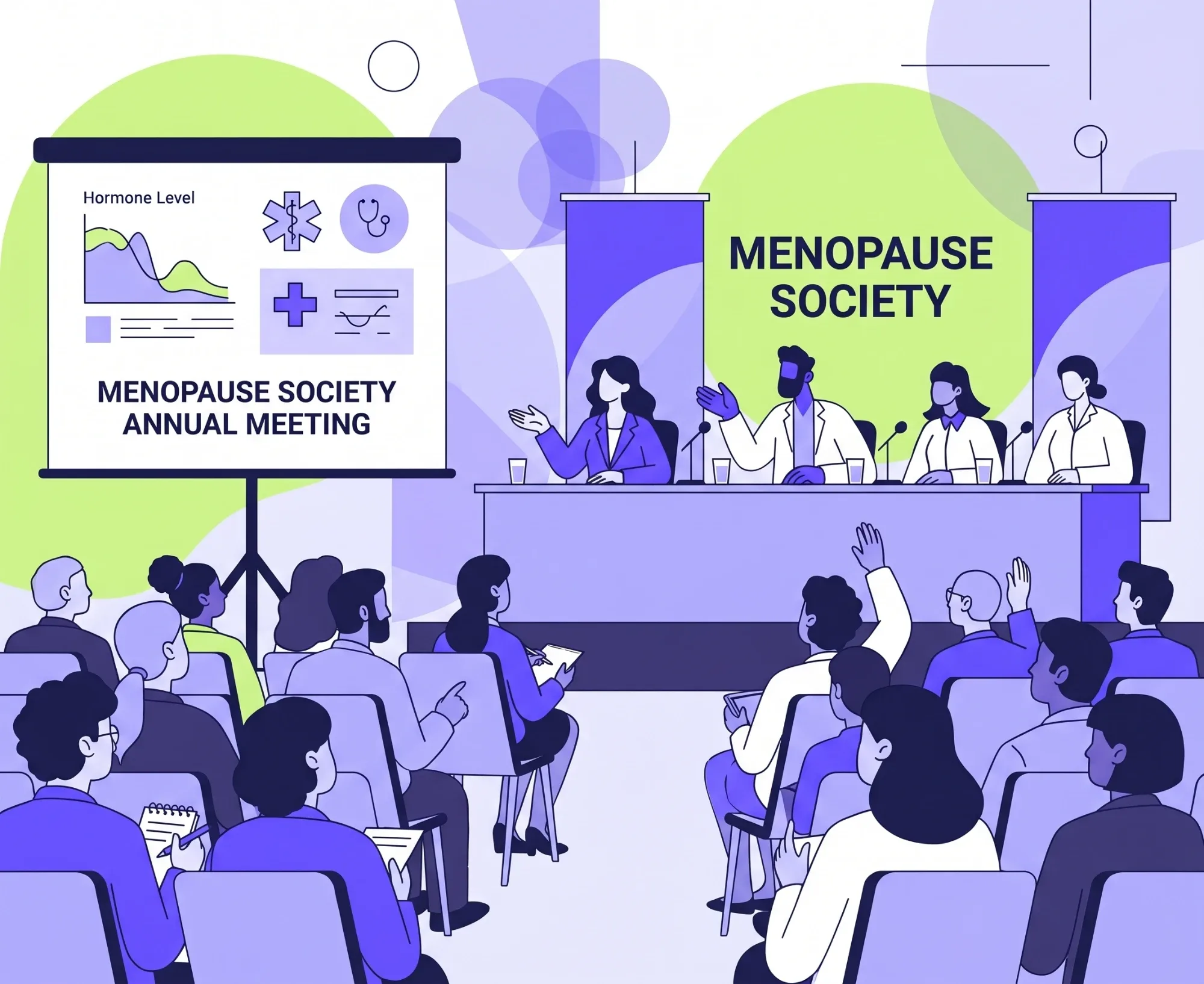
Every year, The Menopause Society holds its annual meeting in the fall, gathering thousands of health care practitioners over a five-day period to hear from experts in gynecology, cardiology, endocrinology, dermatology, and internal medicine. Researchers and academic medicine specialists, physical therapists, and dietitians are all there to provide evidence and information on best practices for caring for perimenopausal and postmenopausal women. It can be exciting and overwhelming.
This year, the conference was in San Diego and had a big focus on prevention and lifestyle medicine. More than 2,500 practitioners attended the conference, and topics ranged from “What supplements can we recommend?” to “Can we treat hair loss with hormones?” These are questions that we—and our patients—want answers to. We want to follow the evidence to give our patients the best and safest advice, but not infrequently, speakers admitted that certain topics lived squarely in a “data-free zone,” acknowledging that there is not enough good research or evidence to know what to recommend to patients who need and want those answers.
However, there were many informative, interesting, and even entertaining lectures throughout the five days, and I’d like to share some of the key takeaways:
- Hormone therapy is considered the most effective treatment for vasomotor symptoms of menopause, including hot flashes and night sweats. The benefit-to-risk ratio for women who are within 10 years of menopause onset and have no contraindications—reasons they cannot safely use hormones—is favorable. There is data for women more than 10 years from their menopause transition, but this is more nuanced and requires more discussion of risks, benefits, and expectations.
- Nonhormonal treatments for menopausal symptoms are recommended for women who cannot or do not want to use menopausal hormone therapy. There is evidence behind cognitive behavioral therapy (CBT), certain antidepressant and antianxiety medications, and medications called neurokinin antagonists.
There are six pillars of lifestyle medicine that can also be used to prevent, treat, and reverse chronic diseases as an integral part of a whole-menopause plan:
- A whole-food, plant-predominant eating pattern
- Physical activity
- Restorative sleep
- Stress management
- Avoidance of risky substances
- Positive social connection
These can all be incorporated into a menopause plan that may or may not include hormone therapy.
- Dietary supplements mostly have little to no evidence from controlled studies to prove their efficacy. There is positive data for the use of vitamin D, iron, calcium, and creatine, but mixed data for the use of omega-3s, soy products, and D-mannose. However, if there is a proven deficiency of a vitamin or mineral, there is evidence that it should be replaced.
Sleep is essential to cardiovascular health. The things you need for good, restorative sleep include:
- Regularity: Go to sleep at the same time each night.
- Morning light: Open the curtains in the morning. This anchors your circadian rhythm.
- Regular physical activity
- Limiting or eliminating alcohol, especially later in the day. Alcohol fragments sleep.
- Eliminating caffeine later in the day. Caffeine consumed later can disrupt sleep.
Good sleep hygiene alone can not fix chronic insomnia, and cognitive behavioral therapy specifically geared toward insomnia has good evidence for treating it.
- Breast arterial calcifications: It is now known that calcifications of arteries seen on a mammogram are linked to a threefold increase in coronary artery disease. These are calcium deposits in small and medium-sized arteries that show up incidentally on screening mammography. This is not yet incorporated into guidelines for risk assessment, but finding this on your mammogram should support your doctor in starting or intensifying preventive therapy for cardiac disease.
- Although this topic is discussed on many social media platforms, current evidence does not support using menopausal hormone therapy to prevent cardiovascular disease or dementia. There is also no good evidence for treating hair loss with hormones.
- The perimenopause is a unique window to assess medical risk and prevent future medical problems. During perimenopause, know your numbers: BMI, blood pressure, cholesterol—including LDL-C—and Lp(a) and ApoB. There are risk calculators online, such as the PREVENT and ASCVD calculators, where you and your doctor can enter your numbers and get a risk percentage. Then you should act on that risk, whether through lifestyle changes, medications, or testing, all geared toward lowering your future risk. You should also know your complete medical and family history and recognize that problems during pregnancy, such as preeclampsia or gestational diabetes, are predictors of future metabolic conditions.
- Risks increase and accelerate across the menopausal transition, and these risks are distinct from risks that accumulate due to aging alone. Estrogen loss changes the way so many systems in our bodies function that menopause itself confers risks to many organ systems.
- Vaginal estrogen is underutilized and under-offered in doctors’ offices. The evidence shows that using vaginal estrogen not only relieves symptoms of vaginal dryness but could also be associated with fewer urinary tract infections, hospitalizations, and deaths from sepsis. Even if you are not having bothersome symptoms of vaginal dryness, using vaginal estrogen can have benefits now and in the future.
One big takeaway for me from The Menopause Society meeting is that there is always something new to learn. Science continues to evolve, new evidence emerges, and our understanding of menopause keeps growing. Every meeting is a reminder that the more we learn, the better equipped we are to support all women through the menopause transition and for the rest of their menopausal lives. Having a menopause practitioner who partners with you through this journey is key to receiving the safest and most up-to-date care throughout this important life stage.
Wondering what your symptoms add up to?
Start a structured intake reviewed by a licensed US clinician.
Educational only. This article is not medical advice, does not diagnose you, and does not guarantee treatment or prescription eligibility.
Add to preferred sources on Google (opens in a new tab)
Keep reading

The Hormone Pendulum: Enthusiasm May Need A Reality Check
Hormone therapy can help some women, but timing, age, health history, and personal goals matter. Learn why starting later calls for careful evaluation.
November 9, 20265 min read
Read the post
Can Comprehensive Care Address the Menopause Gap?
Menopause symptoms can affect sleep, work, relationships, and quality of life. Learn what comprehensive, connected care may include.
November 2, 20263 min read
Read the post
Getting to the Heart of the Matter
Menopause can change cholesterol, blood pressure, body composition, and other heart risk factors. Learn what to monitor and discuss during the transition.
October 19, 20265 min read
Read the post