Can Comprehensive Care Address the Menopause Gap?
Rebecca Levy-Gantt
November 2, 20263 min read
Menopause symptoms can affect sleep, work, relationships, and quality of life. Learn what comprehensive, connected care may include.
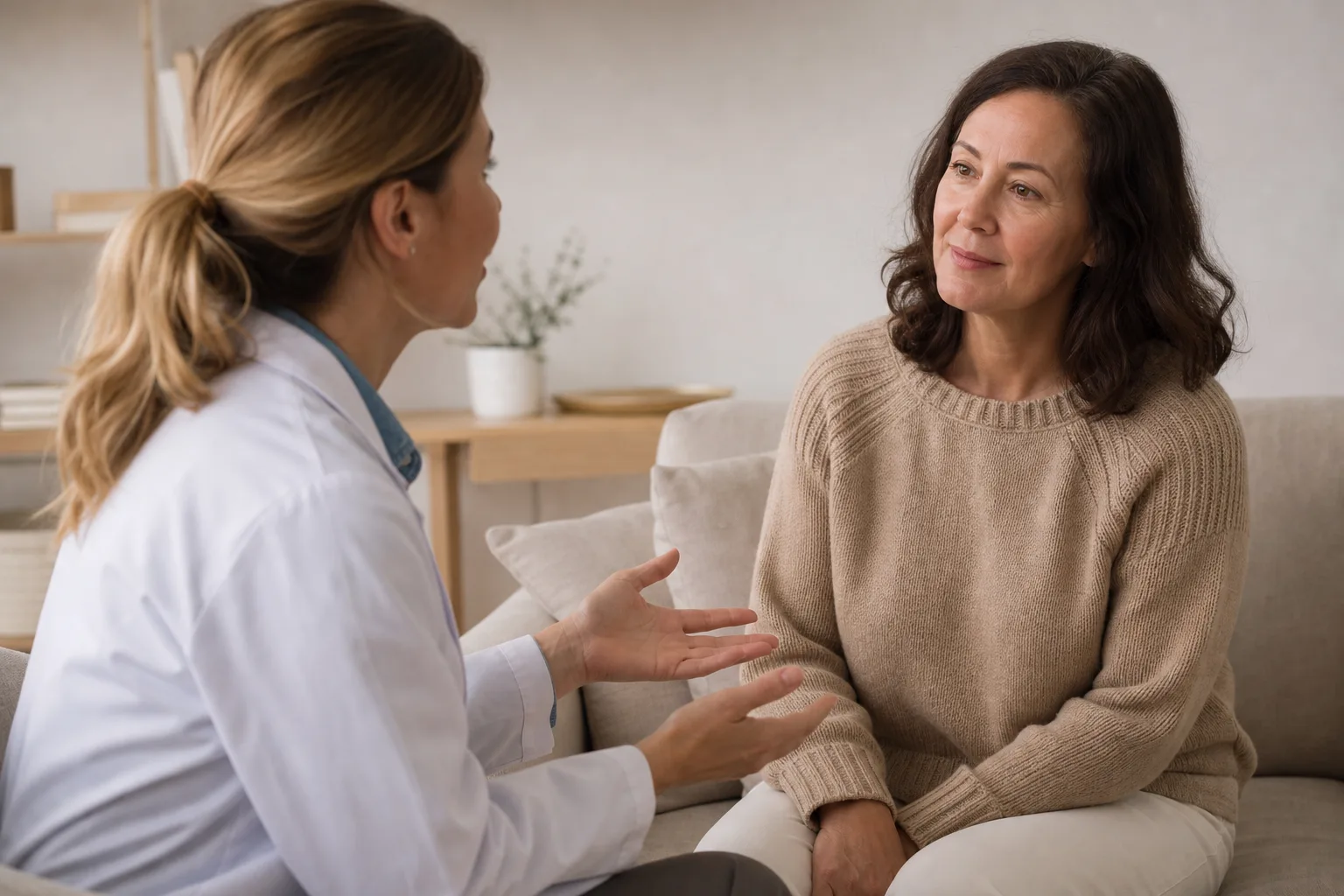
What if, every time you had an appointment with your health care provider, you felt that your problems were being addressed in a comprehensive, kind, supportive way, with your doctor recognizing how one medical condition or diagnosis could potentially affect every aspect of your life? What if, for example, your persistent chronic headaches were affecting you in many different ways?
- They caused you severe pain.
- You were unable to work, causing financial strain.
- They left you feeling sad and depressed due to the constant discomfort.
- Your relationships were suffering because you could not be around people when the headaches were present.
- The headaches took away your appetite, so you were eating poorly.
- You could not get a good night of sleep.
What if your doctor addressed not only the headaches in terms of pain, but also guided you to a sleep specialist, a nutritionist, a relationship counselor, a therapist, and a financial coach?
That would be considered pretty comprehensive care. Not only would your headaches likely get better, but many other quality-of-life issues would be addressed as well, leading to a much more complete life solution. The treatments would address the “whole person,” improving areas you may not even have recognized as connected to the original problem.
All women who live long enough will find themselves in menopause. Women seek care for their menopausal symptoms, yet access to evidence-based care remains limited, inconsistent, and difficult to navigate. But what if the care and treatment of menopausal women could be delivered in a similar, comprehensive model? One that integrated education, personalized guidance, and specialized clinical care that treats the “whole woman” and helps patients navigate this critical life stage? Not just looking at each individual symptom, but also at how those symptoms affect many other aspects of her life and addressing those as well?
In October, Progyny, an American benefits-management company in New York, announced findings from a new clinical outcomes study showing a significant improvement in menopause symptoms among women who were receiving care through a program that provided personalized, comprehensive care and coaching from menopause-trained providers.* In the paper, called Beyond the Hype: Evidence for a Connected Model of Menopause Care, the authors describe a current gap: Millions of menopausal women are seeking care, yet they are unable to find trusted, evidence-based guidance when they need it. They state that their care is often fragmented and difficult to coordinate among many different specialists.
The paper explains that for a comprehensive program to work, it must include several connected components:
- Evidence-based education: Women must be provided with ongoing, accurate information based on science and evidence, beginning in the premenopausal and perimenopausal years, so they know what to expect, how to recognize symptoms, and what options are available. This education must be comprehensive and ongoing throughout all stages of life.
- Menopause-trained providers: Providers who are familiar with the physical, emotional, social, psychological, and sexual components of menopause care. They should have the ability to address many separate but related issues as part of comprehensive menopause planning.
For this type of complete and effective menopause care to become the norm, important changes would have to take place: Physicians in training would have to have more exposure to perimenopause and menopause care. Currently, surveys show that only about 31.3% of OB-GYN residency programs offer any kind of structured menopause curriculum. Fewer than 7% of residents across OB-GYN, family medicine, and internal medicine report feeling adequately prepared to manage menopause and hormone therapy. How can physicians comprehensively care for women in these critical stages if they have never been taught?
Good menopause care means looking beyond individual symptoms to understand how hormonal changes affect every aspect of a woman’s life. It means having a knowledgeable provider who listens, recognizes the connections, and develops a comprehensive plan that can be followed and adjusted as needed to address how menopause affects health, relationships, work, sleep, and quality of life. This kind of care is possible, deserved, and necessary.
Wondering what your symptoms add up to?
Start a structured intake reviewed by a licensed US clinician.
Educational only. This article is not medical advice, does not diagnose you, and does not guarantee treatment or prescription eligibility.
Add to preferred sources on Google (opens in a new tab)
Keep reading

What's in the Menopause Toolbox?
Menopause treatment is not one-size-fits-all. Learn how hormone and nonhormonal options may be tailored to your symptoms, health history, and goals.
October 6, 20265 min read
Read the post
The Hormone Pendulum: Enthusiasm May Need A Reality Check
Hormone therapy can help some women, but timing, age, health history, and personal goals matter. Learn why starting later calls for careful evaluation.
November 9, 20265 min read
Read the post
The Menopause Society Annual Meeting: A Learning Experience
What does a menopause practitioner learn from attending an annual menopause society meeting?
October 27, 20265 min read
Read the post