The guide
Every symptom, explained honestly.
What perimenopause and menopause can feel like. Each symptom links to a guide with the science, the red flags, and what clinical review looks like. You can read it without leaving an email.
Add to preferred sources on Google (opens in a new tab)

Heat & sleep
Hot flashes, night sweats, and the sleep they steal.

Hot flashes
A hot flash is a sudden feeling of intense heat, usually across the face, neck, and chest, often with sweating, flushed skin, or a racing heartbeat, typically lasting one to five minutes. Hot flashes are strongly linked to fluctuating estrogen levels during perimenopause and menopause, which affect how the brain regulates body temperature.
Full guide
Night sweats
Night sweats are episodes of heavy sweating during sleep, often enough to soak nightclothes or sheets, and are commonly the night-time form of hot flashes. During perimenopause and menopause, fluctuating estrogen affects the brain’s temperature regulation, triggering sweating episodes even in a cool room.
Full guide

Sleep problems
Sleep problems during perimenopause and menopause include difficulty falling asleep, waking during the night (often around 3–4am), and waking too early. Declining and fluctuating estrogen and progesterone affect sleep regulation directly, while night sweats, anxiety, and an overactive mind add further disruption.
Full guide
Body odor changes
Body odor changes during perimenopause and menopause happen because hot flashes and night sweats increase sweat volume, while shifting estrogen-to-androgen balance changes sweat composition and skin bacteria. The result can be a noticeably different or stronger odor, a common, normal, and manageable part of the transition.
Full guide
Mind & mood
Estrogen interacts with brain chemistry. When it swings, thinking and feeling swing too.

Brain fog
Brain fog during perimenopause and menopause describes difficulty with memory, focus, and word-finding, like walking into a room and forgetting why, or losing a familiar name mid-sentence. Estrogen supports brain functions including memory and processing, so fluctuating levels during the transition commonly affect cognition.
Full guide
Mood swings
Menopause and perimenopause mood swings, sudden irritability, tearfulness, or anger that feels out of proportion, are linked to fluctuating and then declining estrogen and progesterone, which interact with mood-regulating brain chemistry including serotonin. Swings are often most pronounced in perimenopause, when hormones vary the most, and can continue into menopause. Broken sleep and life stress amplify them, and women with a history of PMS or postpartum mood changes may be more sensitive.
Full guide

Anxiety
Anxiety during perimenopause and menopause, racing thoughts, unease, a pounding heart, sometimes panic, can be linked to fluctuating estrogen and declining progesterone, which interact with mood-regulating brain chemistry including serotonin and GABA. Many women experience anxiety for the first time during perimenopause, when hormones swing most; for some it eases as levels stabilize after menopause, while others notice it persists. Broken sleep amplifies it.
Full guide
Low mood & depression
Low mood and depression risk increase during perimenopause, research shows the transition is a window of heightened vulnerability, even for women with no prior history. Fluctuating estrogen affects serotonin and other mood-regulating systems, while sleep disruption and life stressors compound the effect. Midlife depression is treatable, and urgent help is always available at 988.
Full guide
Body & energy
Metabolism, joints, skin, and hair all relied on estrogen more than anyone told you.
Fatigue
Fatigue during perimenopause and menopause is a persistent, heavy tiredness that rest doesn’t fully fix. It is commonly driven by a combination of sleep disruption (often from night sweats), fluctuating estrogen and progesterone, and mood changes, though thyroid conditions, low iron, and other causes should also be considered, which is why clinical review matters.
Full guide
Weight changes
Weight gain during perimenopause and menopause, especially around the middle, is driven by declining estrogen, which shifts fat storage toward the abdomen, alongside age-related muscle loss that slows metabolism, and sleep disruption that affects appetite hormones. Many women gain weight during the transition without any change in eating or exercise habits.
Full guide
Joint pain
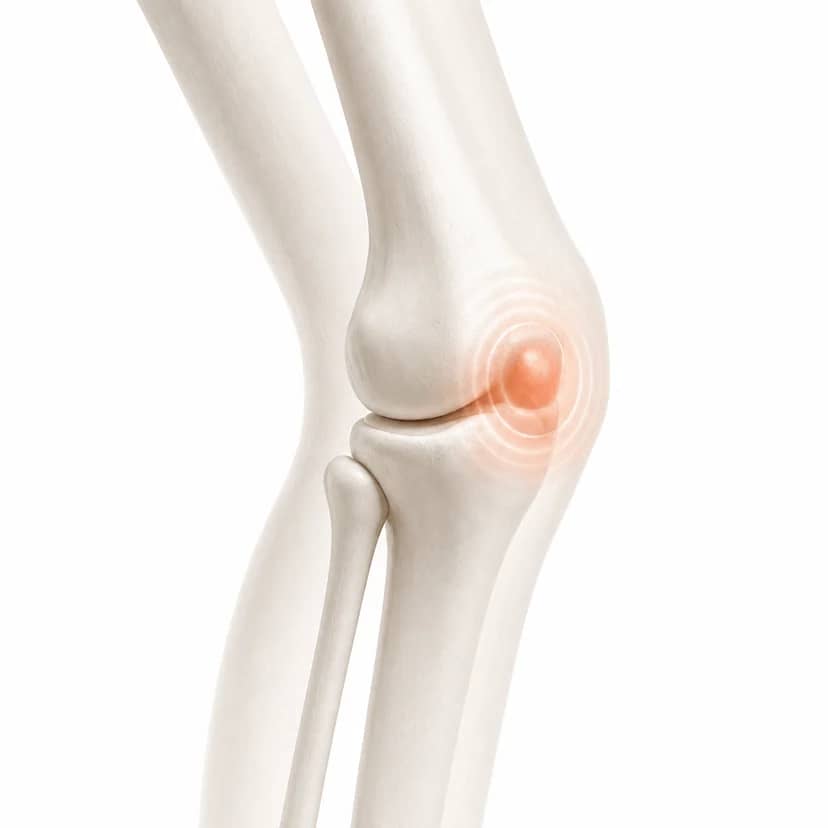
Joint pain and stiffness during perimenopause and menopause, sometimes called menopausal arthralgia, are linked to declining estrogen, which has anti-inflammatory effects and supports cartilage and connective tissue. Aches are often worst in the morning and affect knees, hips, hands, and shoulders, though other causes of joint pain should also be considered.
Full guide
Bloating
Bloating during perimenopause is linked to fluctuating estrogen, which affects fluid retention, and declining progesterone, which slows digestion. Hormonal shifts also influence the gut microbiome. Perimenopausal bloating often comes and goes with hormone swings, but persistent or worsening bloating should be evaluated by a clinician to rule out other causes.
Full guide

Dry skin
Dry skin during perimenopause and menopause happens because declining estrogen reduces collagen production, natural oils, and the skin’s ability to hold moisture. Skin loses roughly a quarter of its collagen in the first five years after menopause, which shows up as dryness, thinning, itchiness, and new sensitivity.
Full guide

Hair thinning
Hair thinning during perimenopause and menopause is linked to declining estrogen and progesterone, which support the hair growth phase; as they fall, more follicles enter the resting phase and shed. With shifting hormones, there can be a gradual thinning of the hair follicles, most notably at the part and the crown. Thyroid conditions and low iron are common contributors worth ruling out.
Full guide
Tingling
Tingling or pins-and-needles (paresthesia) during perimenopause and menopause is thought to relate to estrogen’s effects on the nervous system and circulation. It is usually benign and transient, but because tingling can also signal nerve compression, vitamin deficiencies, diabetes, and other conditions, new or persistent tingling always deserves clinical review.
Full guide
Cycle & heart
The signals that mark the transition itself, and the ones that deserve extra care.
Irregular periods
Irregular periods in perimenopause happen because ovulation becomes inconsistent, making estrogen and progesterone production erratic. Cycles may shorten, lengthen, skip months, or vary in flow, all typical of the transition. However, very heavy bleeding, bleeding between periods, or any bleeding after 12 months without a period should be evaluated promptly.
Full guide
Headaches & migraines
Headaches and migraines often change during perimenopause due to fluctuating estrogen levels. Estrogen can be a migraine trigger, whether it is too high or too low, and many women’s migraines worsen or become less predictable during the transition. For many, migraines improve after menopause when hormone levels stabilize.
Full guide
Heart palpitations
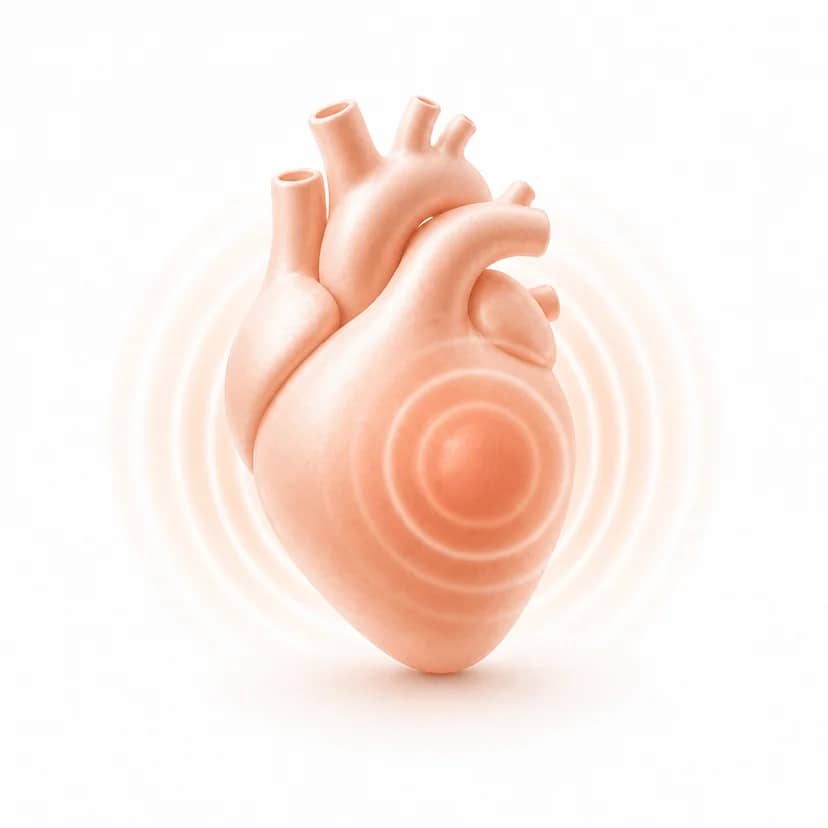
Heart palpitations during perimenopause and menopause, a racing, pounding, or fluttering sensation, are linked to fluctuating estrogen’s effects on the cardiovascular and nervous systems, and commonly accompany hot flashes. They are usually benign, but new or frequent palpitations should always be clinically evaluated to rule out heart rhythm and thyroid conditions.
Full guide
Intimate health
The most under-reported symptoms, and among the most persistently treatable.

Vaginal dryness
Vaginal dryness after perimenopause and menopause happens because declining estrogen thins vaginal tissue and reduces natural lubrication and elasticity, a condition clinicians call genitourinary syndrome of menopause (GSM). Unlike hot flashes, it typically does not resolve on its own, but it is commonly manageable once properly evaluated.
Full guide

Painful sex
Painful sex (dyspareunia) during and after menopause is most often caused by declining estrogen, which thins vaginal tissue and reduces lubrication and elasticity, part of genitourinary syndrome of menopause (GSM). Unlike many transition symptoms, it typically persists without treatment, but it is among the most commonly addressable once properly evaluated.
Full guide
Low libido
Low libido during perimenopause and menopause is common and usually multifactorial: declining estrogen and testosterone reduce desire and arousal directly, while vaginal dryness makes sex less comfortable, and fatigue, mood changes, and stress do the rest. Because so many factors interact, an individual clinical review matters more than any single fix.
Full guide
Urinary changes
Urinary changes during and after menopause, urgency, more frequent urination, leaks, and recurrent UTIs, happen because the bladder, urethra, and pelvic tissues are estrogen-dependent. As estrogen declines, these tissues thin and the urinary microbiome changes, part of genitourinary syndrome of menopause (GSM). These symptoms typically persist without treatment but are commonly manageable once evaluated.
Full guide
Recognize yourself in more than a few of these?
Start a structured intake reviewed by a licensed US clinician.
Educational content only. This is not medical advice, a diagnosis, or a guarantee of treatment eligibility. If you are experiencing a medical emergency, call 911.