The Perimenopause Period Has a Mind of Its Own

Rebecca Levy-Gantt
September 22, 20263 min read
Perimenopause can change familiar cycles into short, long, skipped, spotty, or heavy bleeding. Learn why periods become unpredictable and when to seek care.
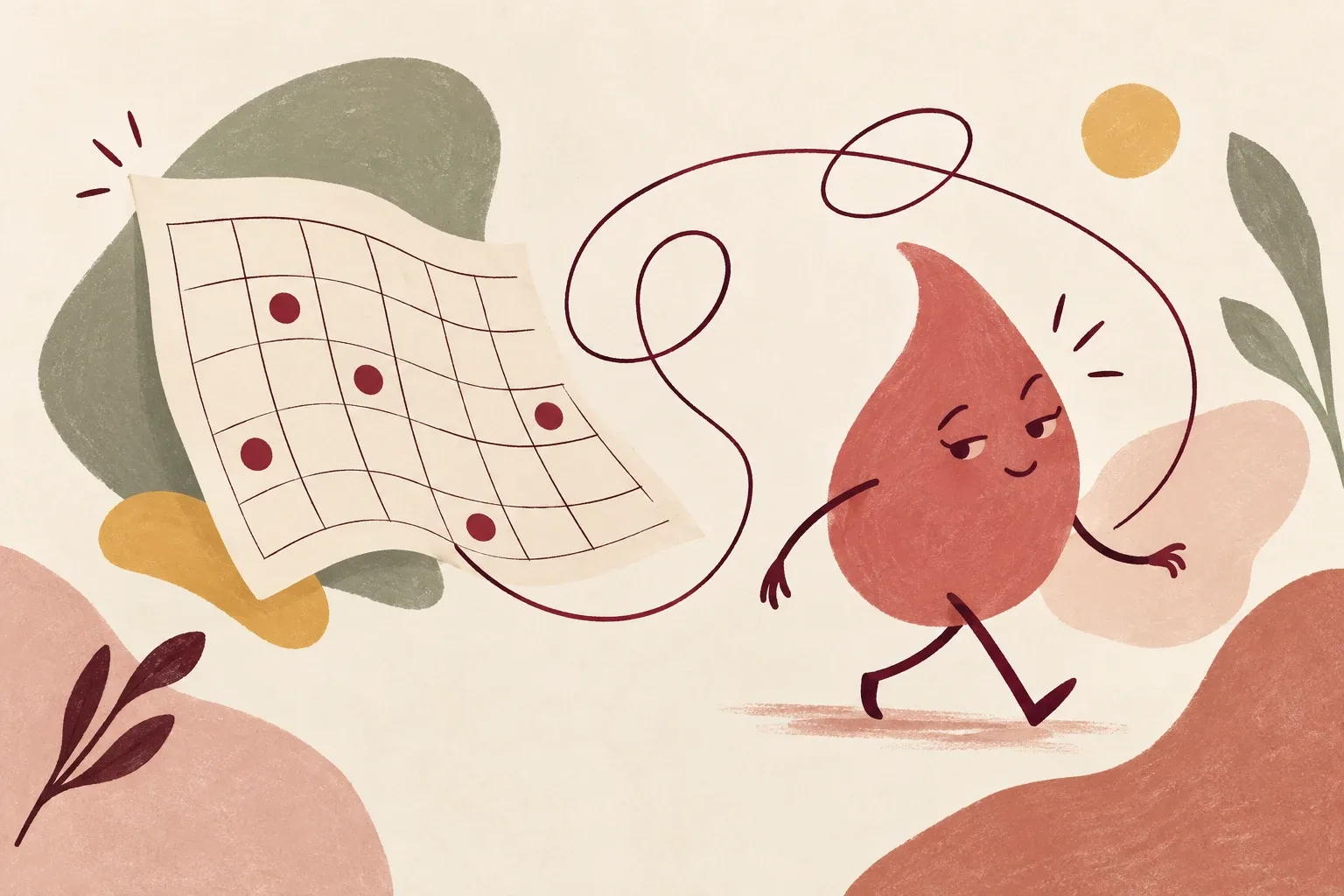
It is certainly possible that for twenty-five years or more, your period has been the event by which you can set your clock or your calendar. For many women, episodes of menstrual bleeding can be as regular and predictable as the four seasons. Every twenty-eight days (or every thirty), those familiar cramps, headaches, and anticipated mood swings herald the onset of spotting, then bleeding, and the need for menstrual products and anti-inflammatories for the next five to seven days. Annoying? Maybe. Disappointing? Sometimes. But also predictable, stable, and expected. Some women find it reassuring: proof that "everything's working."
Until "the transition" happens: perimenopause. This is a time of increasingly erratic ovarian function, which can make your periods (and the moods and expectations surrounding them) unpredictable as well. During regular, monthly cycles, the physiology is clear, simple, and repetitive: The brain signals the ovary to produce estrogen, immature eggs grow into mature ones, ovulation occurs mid-cycle, and then progesterone is produced in the ovary. If no pregnancy occurs, there is controlled, routine, and expected bleeding. Every month.
In perimenopause, the ovaries become less reliable, and ovulation becomes less regular. If there is no ovulation, little or no progesterone will be produced. However, estrogen is still fairly reliably produced in the ovary, causing a thick uterine lining to build up inside the uterus, in case of pregnancy.
The Equation
Estrogen present + little to no progesterone = a thick, unstable uterine lining that will shed unpredictably. This means you can see:
- Short cycles: fewer than 25 days between menstrual cycles
- Long cycles: more than 35 days between bleeding episodes
- Skipped cycles: months in which there is no bleeding at all, followed by heavier bleeding after three or more months
- Spotting: an unstable uterine lining can shed randomly or irregularly throughout the month
- Heavy bleeding: prolonged exposure to estrogen with no counterbalancing progesterone can cause heavy, clotty, dramatic shedding of the lining.
While heavy, irregular bleeding should not be automatically blamed on or "written off" as a result of perimenopause, it is possible that any of these patterns may occur and can be treated once other unusual or dangerous causes have been ruled out.
The unpredictability of estrogen and progesterone is the hallmark of perimenopause. This is why a single blood test to measure hormone levels during perimenopause is mostly unnecessary. The hormonal environment is changing from day to day and from cycle to cycle. There is no hormone level that provides a diagnosis of perimenopause.
Some women have never had the predictability of a regular menstrual cycle throughout their twenties and thirties. Medical conditions like thyroid disease, polycystic ovarian syndrome, eating disorders, other endocrine (glandular) disorders, and medication side effects can change menstrual patterns. Sometimes, there is no diagnosable condition responsible for the irregular bleeding. For these women, the bleeding patterns in perimenopause may not be something new, and they may have to rely on other symptoms to recognize that perimenopause has begun.
It may seem that during these transitional years, your period can really have a mind of its own. But understanding the physiology behind the changes in bleeding patterns may make the unpredictability a little less mysterious—and a lot easier to navigate.
Wondering what your symptoms add up to?
Start a structured intake reviewed by a licensed US clinician.
Educational only. This article is not medical advice, does not diagnose you, and does not guarantee treatment or prescription eligibility.
Add to preferred sources on Google (opens in a new tab)
Keep reading

Perimenopause: The Years When Your Body Stops Following The Rules
Perimenopause can bring unpredictable changes in bleeding, sleep, mood, and energy. Learn how hormone fluctuations shape symptoms and the treatment options that may help create stability.
September 28, 20264 min read
Read the post
Can perimenopause start at 38?
Yes, perimenopause can begin at 38. Learn which cycle changes and symptoms may be part of the transition, when to see a clinician, and what to know about pregnancy.
July 28, 20263 min read
Read the post
Getting to the Heart of the Matter
Menopause can change cholesterol, blood pressure, body composition, and other heart risk factors. Learn what to monitor and discuss during the transition.
October 19, 20265 min read
Read the post